Battery vs. AC vs. Solar vs. Hydropower Commercial Sensor Faucets
The sensor cannot perform reliably without stable electrical power. Commercial faucets may run on replaceable batteries, building AC power, hybrid AC/DC systems, solar harvesting or water-generated hydropower. Each architecture changes installation requirements, maintenance exposure, failure behavior and long-term facility strategy.
Four Main Power Architectures
Easy retrofit installation with recurring battery-service requirements.
Continuous building power with greater initial electrical coordination.
Light harvesting reduces dependence on conventional battery replacement.
Water flow generates energy for sensor-faucet operation.
How Power Choice Changes Maintenance
| Power | Main Advantage | Primary Failure Concern |
|---|---|---|
| Battery | No electrical rough-in | Depleted battery or missed replacement |
| AC | Continuous building supply | Transformer, wiring or building-power interruption |
| AC/DC | Configuration flexibility | Exact backup architecture must be understood |
| Solar | Energy harvesting | Available light and backup battery condition |
| Hydropower | Usage generates energy | Manufacturer-specific generator/controller servicing |
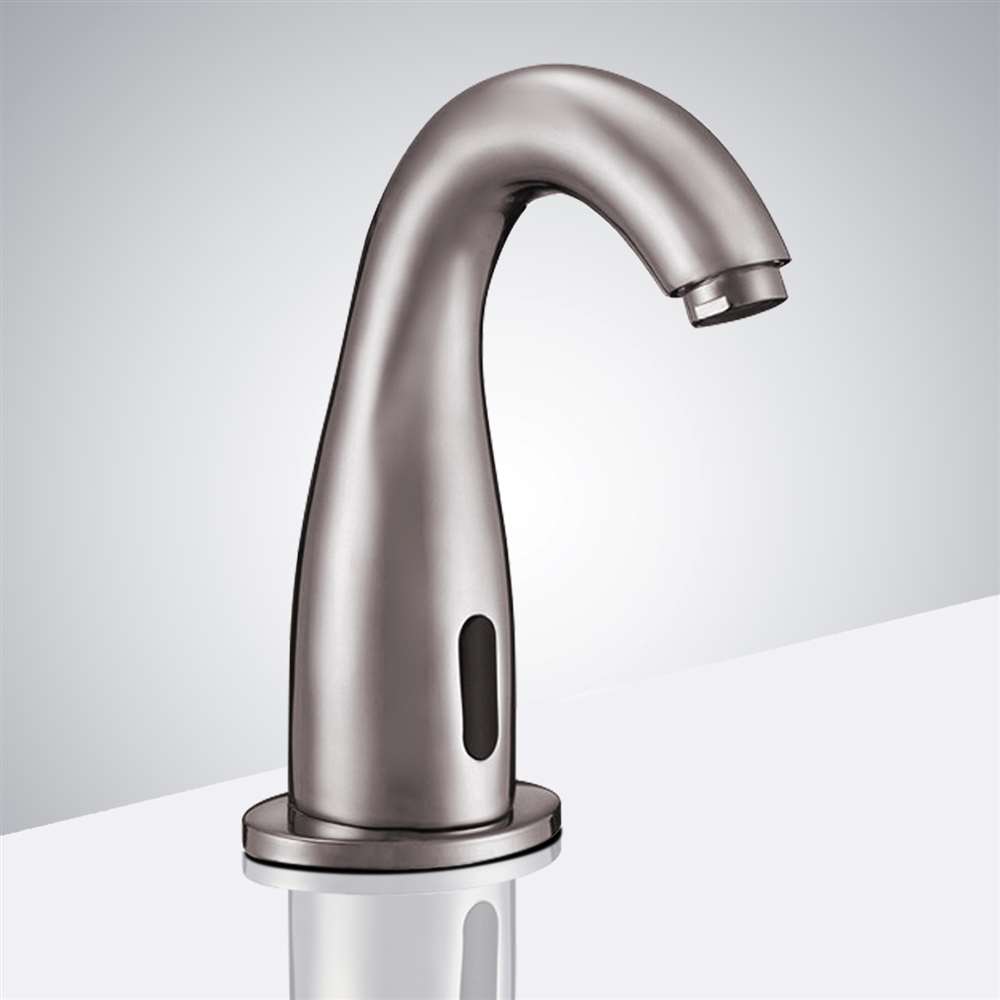
Fontana Plato Automatic Commercial Brushed Nickel Sensor Faucet
The Fontana Plato Automatic Commercial Sensor Faucet demonstrates the hybrid approach. Fontana specifies AC110V and DC6V capability, allowing the same commercial platform to support building power or battery operation depending on the project configuration.
That flexibility is useful for owners standardizing one faucet family across both new construction and renovation projects.
One product architecture can accommodate different project electrical conditions.
Document whether each installation is AC, DC or configured for backup operation.
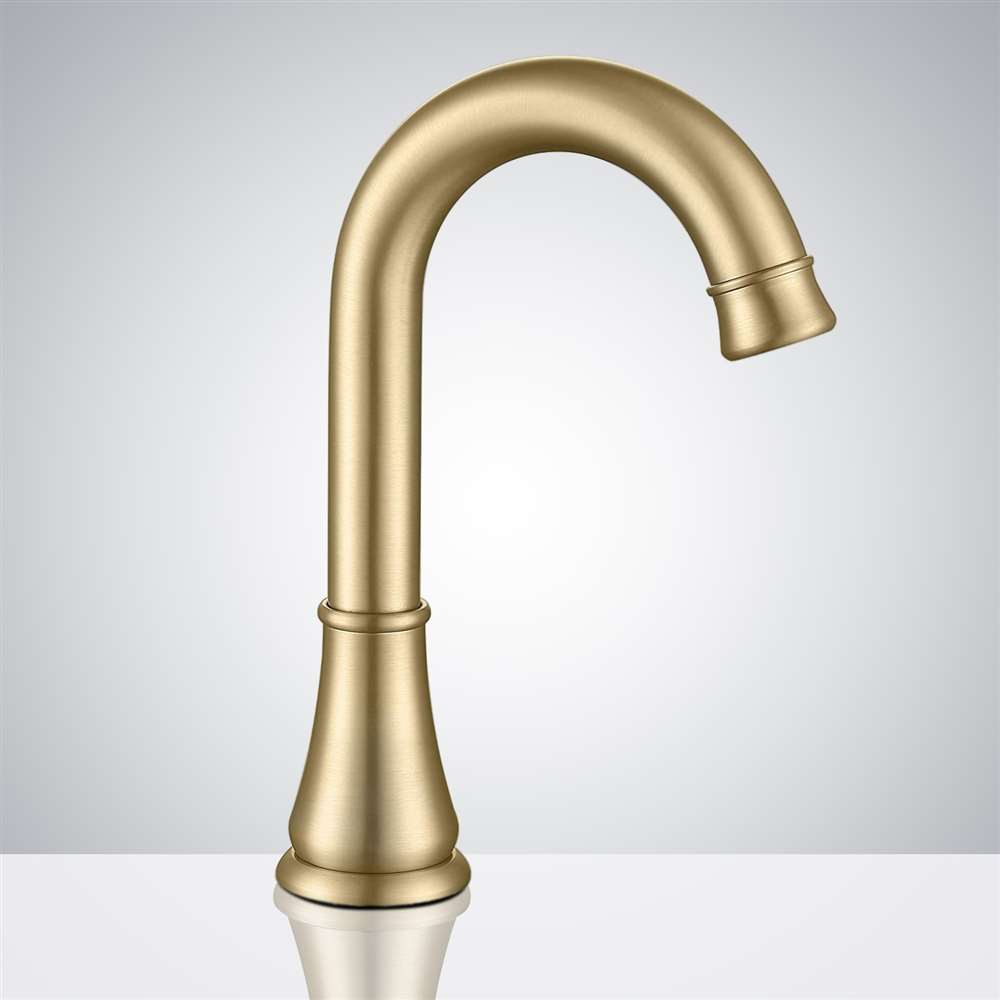
BathSelect Hotel Commercial Brushed Gold Touchless Motion Sensor Faucet
BathSelect’s commercial platform can operate from four AA alkaline batteries or an AC/DC adapter. Published battery expectancy is approximately 200,000 activation cycles, making usage volume—not calendar time—the more meaningful lifecycle metric.
Flexible battery or building-power installation strategy.
Include battery access and replacement procedure in the O&M plan.

Sloan Optima® EAF-275 Solar-Powered Commercial Sensor Faucet
The EAF-275 uses solar power harvesting with a 6 VDC lithium backup power source. Sloan also provides self-adapting dual infrared sensing and several commercial flow configurations.
Solar harvesting can reduce battery-service frequency while retaining backup energy for periods when available restroom light is insufficient.
Ambient-light energy harvesting reduces dependence on battery replacement.
Solar does not mean battery-free; backup battery condition still matters.

TOTO Gooseneck ECOPOWER® 0.5 GPM Touchless Faucet
TOTO’s ECOPOWER system converts water movement into electrical energy for faucet operation. The current T24S51 platform is available with hydropower generation or conventional AC power and uses a self-adjusting sensor with a 0.5 GPM flow control.
High faucet usage contributes directly to operating energy.
Confirm dynamic pressure and exact ECOPOWER controller configuration.

Zurn Serio Series® ZG6955 Hydropower Sensor Faucet
Zurn’s Hydro•X architecture provides another renewable hydropower approach, paired with a gear-driven ceramic cartridge rather than a conventional solenoid. The same family is also offered in plug-in and hardwired configurations.
Renewable water-generated power plus multiple alternate power configurations.
Maintain the correct gear-drive and power-controller service parts.
Image policy: featured products use product-specific imagery displayed uncropped at 500+ px on desktop. If an image endpoint changes after publication, replace it only with a verified exact-product image rather than a generic faucet image.
Why Voltage Stability Matters
A faucet can appear to have a sensing problem when the real problem is insufficient power. Low battery voltage can affect controller and valve operation, while loose transformer connections or wiring faults can interrupt otherwise correct sensing.
Which Power Architecture Fits the Project?
| Project Condition | Recommended Direction |
|---|---|
| Small retrofit without electrical work | Battery |
| Large new-construction portfolio | Hardwired / AC/DC |
| Restroom with stable artificial lighting | Solar harvesting deserves evaluation |
| Very high activation volume | Hydropower becomes especially attractive |
| Mixed renovation/new-build portfolio | Hybrid AC/DC preserves flexibility |
Commercial Sensor Faucet Power Platforms
Sensor Faucet Power FAQ
Are battery sensor faucets unreliable?
No. They can be very reliable when battery condition and service intervals are actively managed.
Is hardwired always better?
No. It reduces battery servicing but requires electrical infrastructure and transformer coordination.
Does a solar faucet work without light?
Commercial solar systems may include stored or backup battery power; verify the exact manufacturer architecture.
How does hydropower work?
Water movement drives a generating mechanism that converts hydraulic energy into electrical energy for faucet operation.
Can low voltage look like a sensor fault?
Yes. Always verify battery or electrical supply before replacing sensing components.
Which power type needs the least maintenance?
There is no universal answer. Installation scale, usage, access and available infrastructure determine lifecycle maintenance.
Professional Sources
Sloan — Commercial Sensor Faucet Power Options
Manufacturer overview covering battery, hardwired, solar and hybrid faucet architectures.
TOTO — ECOPOWER Commercial Faucets
Self-generating hydropower commercial sensor-faucet technology.
Zurn — Hydro•X Sensor Faucet
Hydropower, hardwired and plug-in commercial power configurations.
American Society of Plumbing Engineers
Professional plumbing-engineering and commercial specification resources.
U.S. EPA — Bathroom Faucet Efficiency
Public-lavatory water-efficiency guidance relevant to commercial sensor faucets.
Power Architecture Is Part of Sensor Engineering
Commercial sensor reliability depends on stable power as much as optical detection. Battery systems remain excellent for retrofit flexibility, AC is strong for coordinated new construction, solar can reduce routine battery demand, and hydropower can turn high fixture usage into an energy source. Hybrid AC/DC products such as the Fontana Plato Automatic Commercial Sensor Faucet are especially valuable when one product family must serve several project conditions.
Review Fontana Plato AC/DC Sensor Faucet →Independent editorial disclosure: CommercialSensorFaucets.com provides independent engineering-oriented analysis based on published manufacturer information. Verify exact power supply, backup architecture, electrical requirements and manufacturer specifications before procurement or installation.
Leave a Reply