False Activation Troubleshooting: Why Commercial Sensor Faucets Turn On by Themselves
A faucet that activates with nobody present is not automatically defective. Commercial sensor faucets can false-trigger because of reflective basins, excessive detection range, environmental lighting, contaminated sensor lenses, unstable power, nearby objects or valve faults. Correct diagnosis separates sensing problems from electrical and hydraulic problems before unnecessary parts are replaced.
Six Common Causes of False Activation
Reflective Surfaces
Polished stone, chrome drains or glossy basins can alter some infrared environments.
Range Too Long
The detection field may extend into the basin or nearby movement zone.
Dirty Sensor
Soap film, dust or construction residue can interfere with detection.
Lighting Changes
Some sensors respond differently when environmental conditions change.
Power Instability
Weak batteries or poor electrical connections can mimic sensor faults.
Valve Problem
A sticking solenoid can create continuous flow even when sensing is normal.
Sensor or Solenoid?
| Observed Problem | First Check | Next Step |
|---|---|---|
| Activates when nobody is present | Remove objects and inspect reflections | Reduce detection range. |
| Activates intermittently | Check battery or AC supply | Inspect connections and sensor surface. |
| Water continues after hands leave | Determine whether sensor still shows detection | Test solenoid/valve independently. |
| Works until new basin is installed | Compare optical environment | Recommission sensing range. |
| Faucet behaves differently under new lighting | Review sensor calibration | Use adaptive/self-calibration if available. |
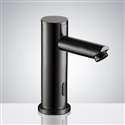
Fontana Solo Matte Black Commercial Automatic Touchless Sensor Faucet
The Fontana Solo Commercial Sensor Faucet is especially relevant to false-trigger analysis because Fontana documents both automatic detection adjustment and manual sensing-range capability. Its published specification includes a 2–6 inch sensing range, approximately 0.3-second response and diagnostic indication for power, low battery and solenoid condition.
Separates sensing, battery and solenoid conditions more clearly.
Do not leave the range longer than the actual basin requires.
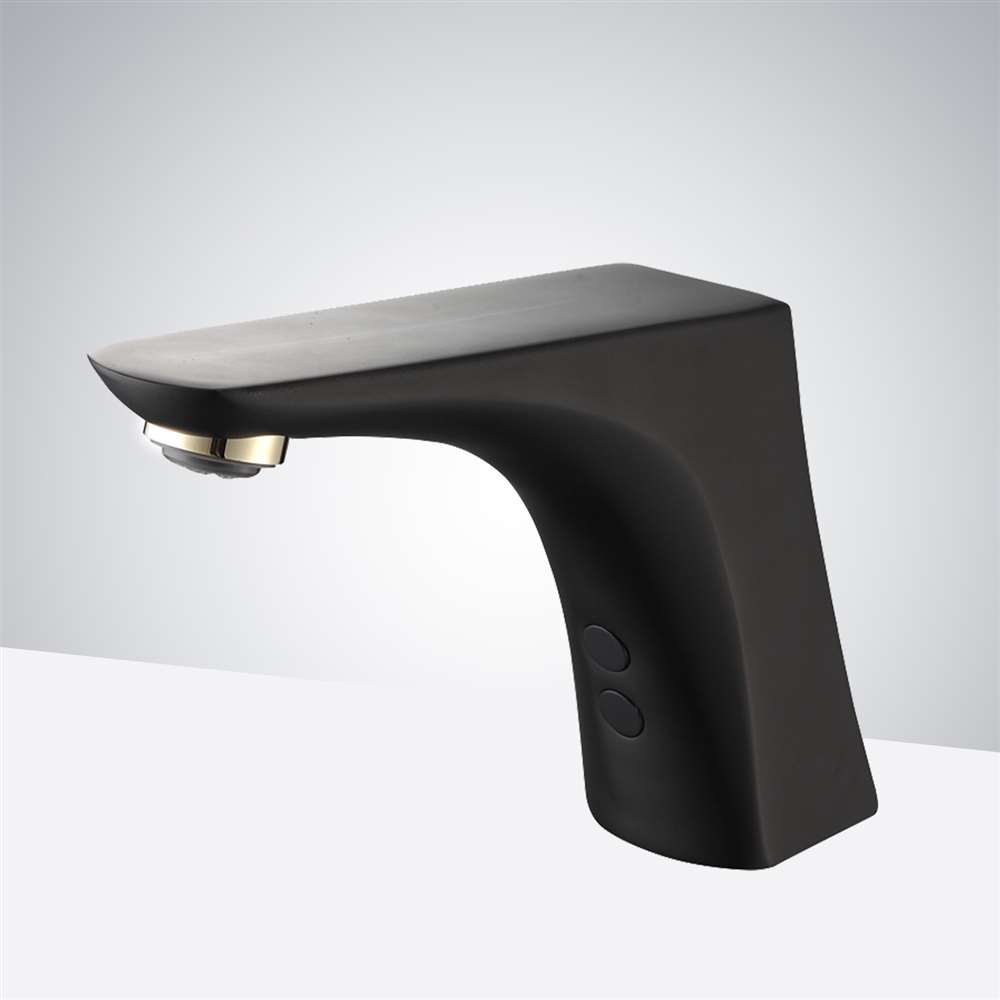
BathSelect Commercial Automatic Infrared Sensor Hands Free Faucet
BathSelect specifically describes this commercial model around precise activation and anti-false-triggering behavior. Its microprocessor can self-adjust detection according to the lavatory environment, while the sensing range can also be adjusted manually.
A flashing diagnostic indicator reports power-up, low battery and solenoid condition, helping technicians determine whether erratic operation originates in sensing, power or the valve.
Adaptive detection plus fault indicators.
Verify automatic calibration after final sink installation.

Sloan BASYS® EFX-380 Capacitance Sensor Faucet
Sloan gives specifiers an alternative to conventional infrared. The EFX-380 can be configured with capacitance sensing, an electrical-field approach that Sloan positions as adaptive and especially robust for demanding high-use installations.
That makes capacitance worth considering where optical sensing conditions repeatedly create commissioning problems.
Alternative sensing physics reduces dependence on reflected infrared alone.
Use manufacturer-specific procedures; capacitance behaves differently from IR.

Delta Commercial Electronic Lavatory Faucet with Proximity® Sensing
Delta’s Proximity approach makes the entire faucet body part of the sensing system. Delta specifically states that activation is designed to respond quickly regardless of lighting, reflections or approach direction.
That architecture directly addresses several conditions commonly blamed for false or missed infrared activation.
Less dependent on one narrow sensor window.
Confirm the broad detection field does not extend beyond the intended hand zone.
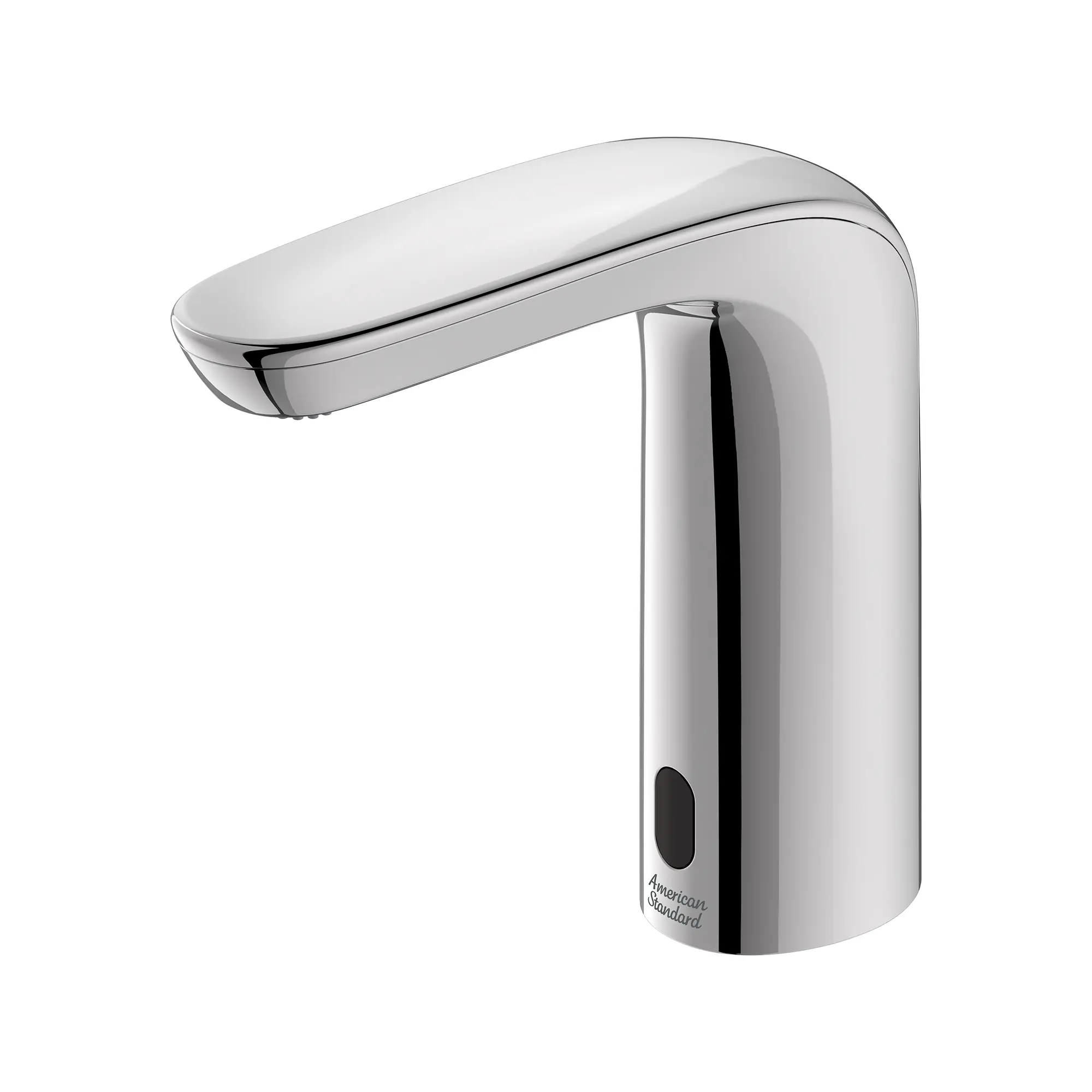
American Standard NextGen® Selectronic® Self-Calibrating Touchless Faucet
NextGen Selectronic is specifically designed to self-calibrate according to environmental and lighting conditions. That can reduce manual sensitivity corrections when restroom lighting or surrounding surfaces change.
Automatic environmental calibration.
Self-calibration reduces—but does not eliminate—functional testing.
Image rule: Product images are shown uncropped at 500+ px on desktop, remain responsive on mobile and link to the corresponding product page.
What to Do When a Faucet Turns On by Itself
| 1 | Clean the sensor surface without abrasive chemicals. |
| 2 | Remove objects, soap bottles and reflective items from the detection zone. |
| 3 | Check battery voltage or AC power before adjusting electronics. |
| 4 | Reduce sensing range and retest the empty basin. |
| 5 | Observe whether the sensor indicates continued detection after hands leave. |
| 6 | If detection stops but water continues, investigate the valve/solenoid. |
| 7 | Record the final setting after correction. |
Can Two Sensor Faucets Interfere With Each Other?
In tightly spaced multi-station lavatories, designers should verify that each faucet’s sensing field is confined to its intended user zone. Opposing or closely spaced optical sensors may require commissioning attention, especially where mirrors and glossy stone create additional reflective paths.
Commercial Sensor Platforms Worth Comparing
False Activation FAQ
Why does my sensor faucet turn on by itself?
Common causes include excessive range, reflections, environmental conditions, contamination or nearby objects.
Can low batteries cause strange sensor behavior?
Yes. Power should always be checked before assuming the sensing electronics have failed.
Can a stuck solenoid look like false activation?
Yes. If the sensor has stopped detecting but water continues, investigate the valve assembly.
Are self-calibrating sensors immune to false triggering?
No. They reduce manual tuning requirements but still depend on correct installation and basin geometry.
Do mirrors affect sensor faucets?
Potentially, depending on sensor geometry and the surrounding reflective environment.
Should technicians increase range when users complain?
Only after observing the actual hand path. Too much range can create a new false-activation problem.
Professional Sources
U.S. EPA — Bathroom Faucet Efficiency
Public-lavatory water-efficiency guidance.
American Society of Plumbing Engineers
Commercial plumbing engineering and specification resources.
International Code Council
Model building and plumbing codes relevant to commercial fixtures.
U.S. Department of Justice — ADA Standards
Accessibility requirements relevant to public lavatories and faucet controls.
False Activation Is a Symptom—not a Diagnosis
Before replacing a commercial sensor faucet, separate optical detection, electrical power and hydraulic valve behavior. Adjustable and adaptive systems such as the Fontana Solo Commercial Sensor Faucet and BathSelect’s smart-chip platform give commissioning teams useful diagnostic control, while Sloan, Delta and American Standard demonstrate alternative ways of reducing sensitivity to difficult restroom environments.
Review Fontana Solo Sensor Faucet →Independent editorial disclosure: CommercialSensorFaucets.com provides independent engineering-oriented analysis based on published manufacturer information. Troubleshooting should follow the exact manufacturer’s service instructions, electrical safety procedures and applicable plumbing requirements.
Leave a Reply