Commercial Sensor Faucets: Infrared Detection, Self-Calibration & False-Activation Engineering Guide
Commercial sensor faucets should not be selected by appearance alone. Sensor field geometry, basin reflectivity, calibration logic, detection distance, power condition and valve response determine whether a faucet feels instantaneous—or becomes a recurring facilities complaint. This engineering guide explains how commercial sensing works and reviews five different sensor platforms.
How Does a Commercial Sensor Faucet Actually Work?
Most commercial faucets use active infrared sensing. An emitter projects infrared energy into a defined detection zone. When hands enter that field, reflected energy reaches the receiver. Control electronics interpret the signal and command the water valve.
The important engineering question is therefore not simply “Does it have an infrared sensor?” It is how intelligently the faucet distinguishes an intentional hand movement from its surrounding environment.
Commercial Sensor Technologies Worth Understanding
Predetermined detection geometry. Simple, but installation conditions matter greatly.
Allows commissioning teams to tune the detection distance.
Electronics automatically compensate for environmental conditions.
Control logic continually interprets changing detection conditions.
Detects changes in an electrical field rather than reflected infrared alone.
The faucet body or broader architecture participates in user detection.
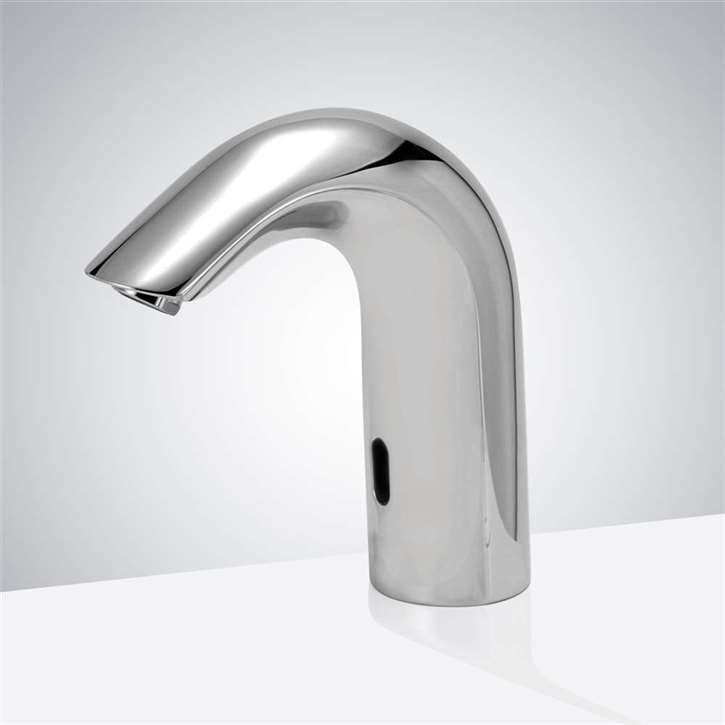
Fontana Deck Mount Commercial Infrared Automatic Touchless Sensor Faucet
The Fontana commercial infrared platform provides a useful baseline for conventional active-IR engineering. The faucet uses infrared detection with AC, DC or dual AC/DC power capability and is designed for high-traffic commercial restroom applications.
For specifiers, its dual-power capability is important: sensing reliability depends not only on optical detection but also on maintaining predictable controller and valve power.
Commercial IR architecture with flexible power strategy.
Verify basin geometry and detection behavior after final installation.
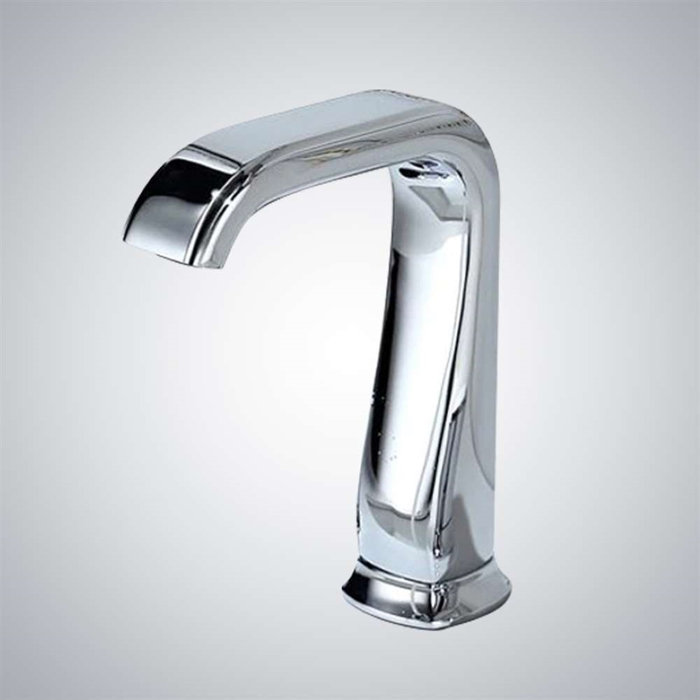
BathSelect Commercial Touchless Automatic Chrome Sensor Faucet
This BathSelect platform demonstrates a more adaptive approach. Its microcomputer can self-adjust the detection zone according to the color and shape of the lavatory, while the sensing range can also be adjusted manually.
Diagnostic indication reports power-up, low-battery and solenoid conditions—useful because what appears to be a “sensor failure” can actually originate in the power supply or valve.
Self-adjustment plus manual sensing-range capability.
Record finalized sensitivity settings for repeated installations.
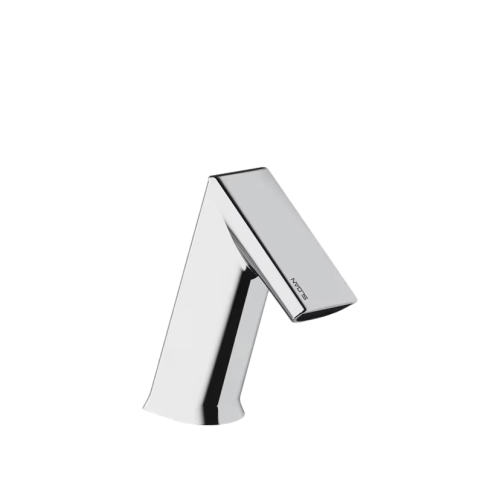
Sloan BASYS® EFX-250 Commercial Sensor Faucet
Sloan provides a useful comparison because Active Infrared sensing is standard across BASYS models, while selected BASYS configurations also support capacitance sensing for adaptive performance.
That distinction matters to engineers: alternative sensing strategies can be considered where reflective materials, installation geometry or unusual user environments challenge conventional optical detection.
Established active-infrared platform with alternative sensing architectures available.
Select sensing technology according to actual restroom environment.
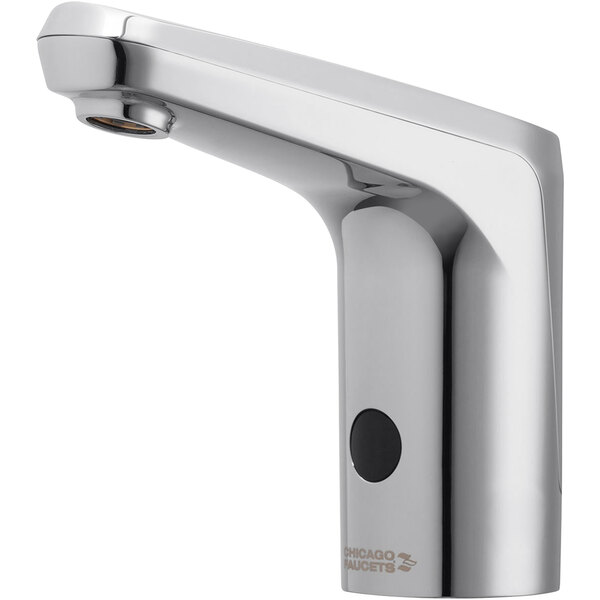
Chicago Faucets EQ® Commercial Touchless Faucet
Chicago Faucets illustrates why sensor specifications should include control behavior, not simply detection distance. Commercial electronic platforms combine sensing with defined runtime, shutoff logic and configurable operating behavior.
A good sensor faucet must both activate correctly and stop correctly. Maximum runtime protects against an obstructed sensor or unusual detection event becoming continuous water flow.
Commercial control logic paired with institutional faucet architecture.
Test activation and deactivation under real basin conditions.
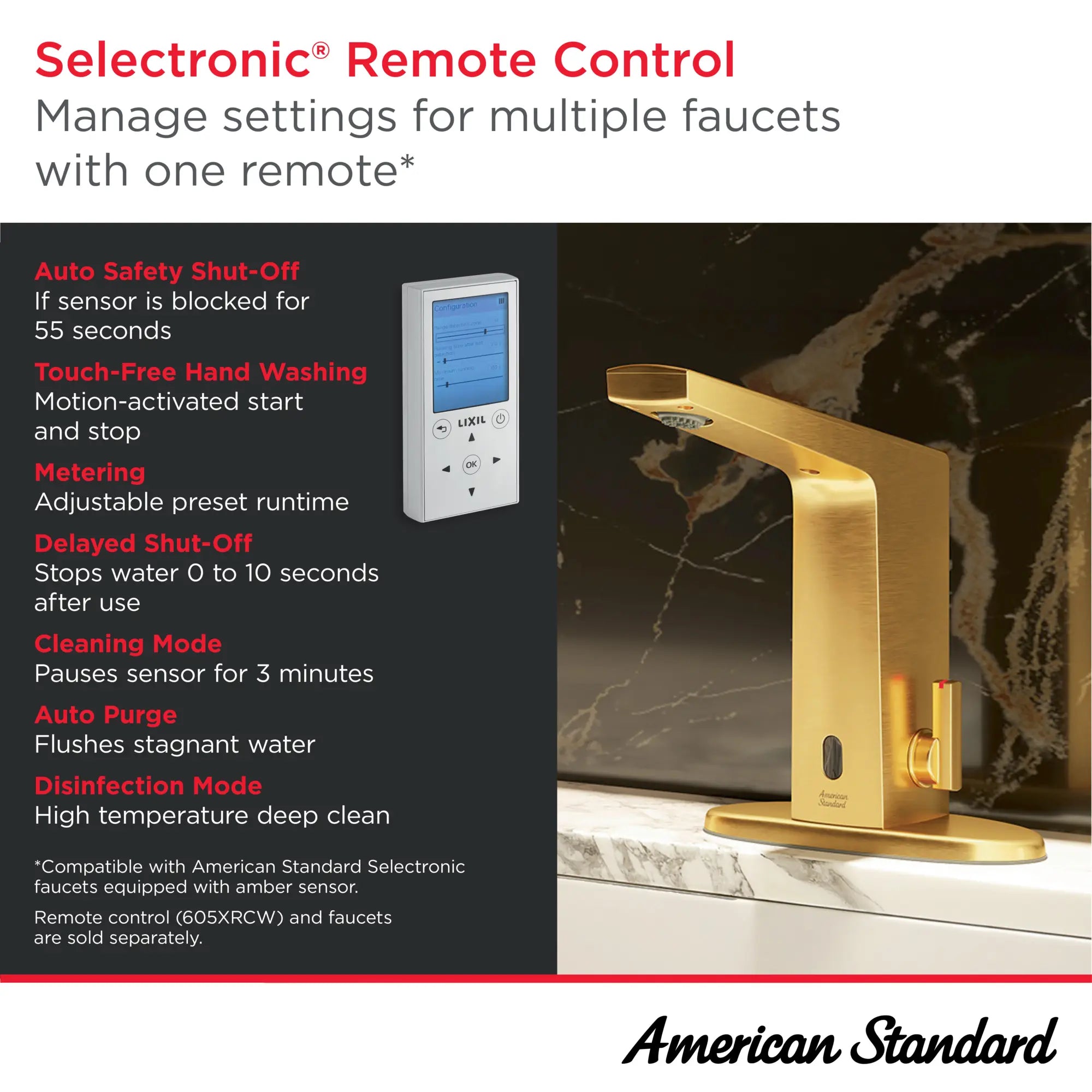
American Standard Paradigm® Selectronic® Self-Calibrating Touchless Faucet
Paradigm demonstrates why self-calibration matters. American Standard states that its advanced sensor calibrates according to environmental and lighting conditions, reducing the need for manual sensor adjustment.
This is particularly relevant where the same faucet is deployed across restrooms with different lighting, countertops and basin materials.
Automatic calibration based on environmental and lighting conditions.
Self-calibration still requires functional verification at handover.
Why Do Commercial Sensor Faucets False-Activate?
| Symptom | Possible Engineering Cause | Commissioning Response |
|---|---|---|
| Water activates with no user | Reflection or oversized detection field | Reduce range; inspect basin reflection. |
| Sensor misses hands | Range too short or poor hand path | Test actual handwashing position. |
| Intermittent activation | Power, connection or detection instability | Check battery/AC supply before replacing sensor. |
| Water will not stop | Detection obstruction or valve issue | Separate sensor diagnosis from solenoid diagnosis. |
| Works before sink installation, fails afterward | Basin changed optical environment | Commission only after final basin installation. |
Seven Tests Before Accepting a Sensor Faucet Installation
| 01 | Approach the faucet using realistic hand movement. |
| 02 | Confirm no activation from the empty basin. |
| 03 | Test multiple hand positions and user heights. |
| 04 | Confirm immediate shutoff after hands leave. |
| 05 | Test the maximum safety timeout. |
| 06 | Confirm stream does not strike the drain directly or create excessive splash. |
| 07 | Record final sensor, power and flow configuration for facilities staff. |
What Architects and MEP Engineers Should Put in the Schedule
A commercial sensor-faucet schedule should identify more than manufacturer and finish. Include sensing technology, detection-range requirements, power architecture, valve location, maximum runtime, flow rate, mixing method, filtration, service access and commissioning requirements.
For non-private public lavatories, EPA currently recommends a flow rate of 0.5 GPM or less. Public lavatory faucets are not currently an eligible WaterSense-labeled product category, so the specification should state the required flow directly.
Commercial Sensor Faucet Brands Worth Researching
Commercial Sensor Faucet FAQ
Are all commercial sensor faucets infrared?
No. Active infrared is extremely common, but selected commercial platforms also use capacitance or other adaptive sensing approaches.
What causes false activation?
Common contributors include excessive sensing distance, reflective surfaces, basin geometry, contamination, environmental conditions and incorrect commissioning.
Does self-calibration eliminate commissioning?
No. Automatic calibration reduces manual adjustment, but installed operation still needs to be functionally verified.
Can a solenoid problem look like a sensor problem?
Yes. Facilities teams should distinguish detection, controller, power and valve failures before replacing components.
When should sensor range be adjusted?
After the final sink, countertop and surrounding finishes are installed and actual hand paths can be tested.
What flow rate should a public commercial faucet use?
EPA recommends 0.5 GPM or less for faucets installed in non-private public toilet facilities.
Professional Specification Resources
U.S. EPA — Bathroom Faucet Efficiency
Public-lavatory flow guidance and current WaterSense eligibility clarification.
U.S. Department of Justice — ADA Standards
Accessibility requirements affecting commercial lavatories and faucet controls.
American Society of Plumbing Engineers
Professional plumbing-engineering and commercial water-system specification resources.
International Code Council
Model plumbing and building codes relevant to commercial fixture design.
U.S. Green Building Council — LEED
Water-efficiency framework relevant to high-performance commercial restroom design.
Specify the Detection System—not Merely the Faucet
A successful commercial sensor faucet installation depends on the relationship between sensing technology, basin geometry, power, control logic and commissioning. Fontana provides a strong commercial infrared reference platform; BathSelect adds adaptive microprocessor calibration; Sloan demonstrates alternative sensing architecture; Chicago Faucets emphasizes commercial control behavior; and American Standard shows the advantages of environment-aware self-calibration.
Review Fontana Commercial Sensor Faucet →Independent editorial disclosure: CommercialSensorFaucets.com provides independent engineering-oriented analysis based on published manufacturer and authority documentation. Product inclusion is not certification or laboratory testing. Architects, engineers and facility teams should verify current manufacturer submittals, applicable codes and project-specific requirements before specification or procurement.
Leave a Reply