Infrared vs. Capacitance Sensor Faucets: Which Detection Technology Is Better for Commercial Restrooms?
Commercial sensor faucets do not all detect users the same way. Infrared systems monitor reflected light inside a defined sensing field, while capacitance systems continuously monitor an electrical field around the faucet. Both can perform extremely well—but basin material, surrounding metal, lighting, commissioning and installation geometry can make one architecture more suitable than another.
How the Two Technologies Differ
Active Infrared
An infrared emitter projects energy into a sensing zone. Hands reflect that energy back toward a receiver, and the controller interprets the reflected signal as user presence.
Primary variables: range, reflection, optical geometry, lighting environment and sensor placement.
Capacitance
The faucet establishes and monitors an electrical field. When a user’s hands enter that field, the electrical characteristics change and the controller activates the valve.
Primary variables: nearby conductive materials, grounding, wiring placement and electrical-field geometry.
Infrared vs. Capacitance at a Glance
| Factor | Infrared | Capacitance |
|---|---|---|
| Detection principle | Reflected infrared energy | Change in electrical field |
| Reflective surfaces | Can require calibration depending on system | Not dependent on optical reflection |
| Metal sinks | Usually manageable with correct geometry | Can be incompatible with some systems |
| Commissioning | Range and environment often adjustable | Electrical isolation becomes critical |
| Lighting sensitivity | Varies by sensor design | Not based on reflected light |
| Industry familiarity | Very high | More specialized |
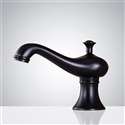
Fontana Commercial Automatic Hands Free Oil-Rubbed Bronze Sensor Faucet
The Fontana Commercial Automatic Hands Free Sensor Faucet represents an advanced infrared approach rather than a simple fixed-range sensor. Fontana documents self-adapting sensing, resistance to abnormal lighting/reflections, an adjustable 2–6 inch range and approximately 0.3-second response.
Optical sensing combined with adaptive electronic compensation.
Final range should still be commissioned with the actual basin.
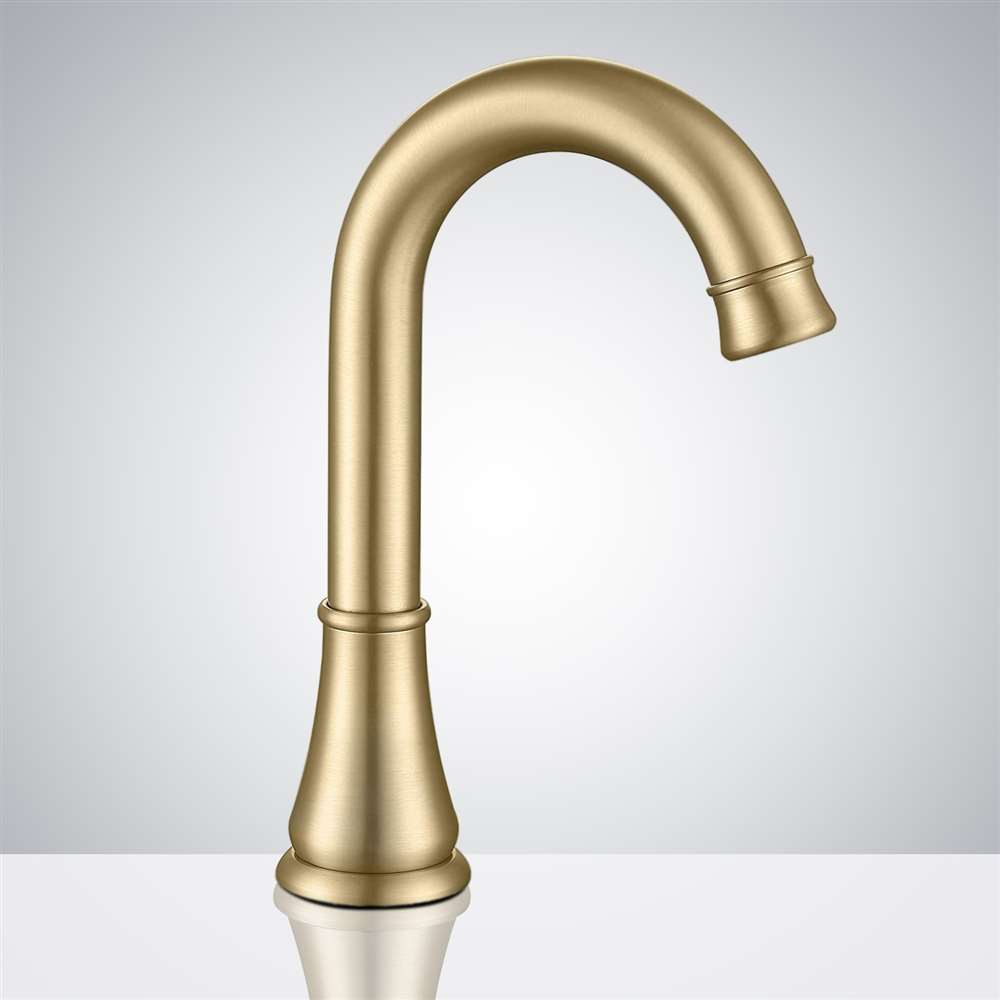
BathSelect Hotel Commercial Brushed Gold Touchless Motion Sensor Faucet
BathSelect uses active infrared with digital microprocessor control, giving the controller more authority over sensing behavior than a basic on/off optical switch. The platform is useful where commercial projects need conventional infrared technology with adjustable sensing and flexible power.
Familiar technology with configurable commercial electronics.
Record finalized sensor settings during commissioning.
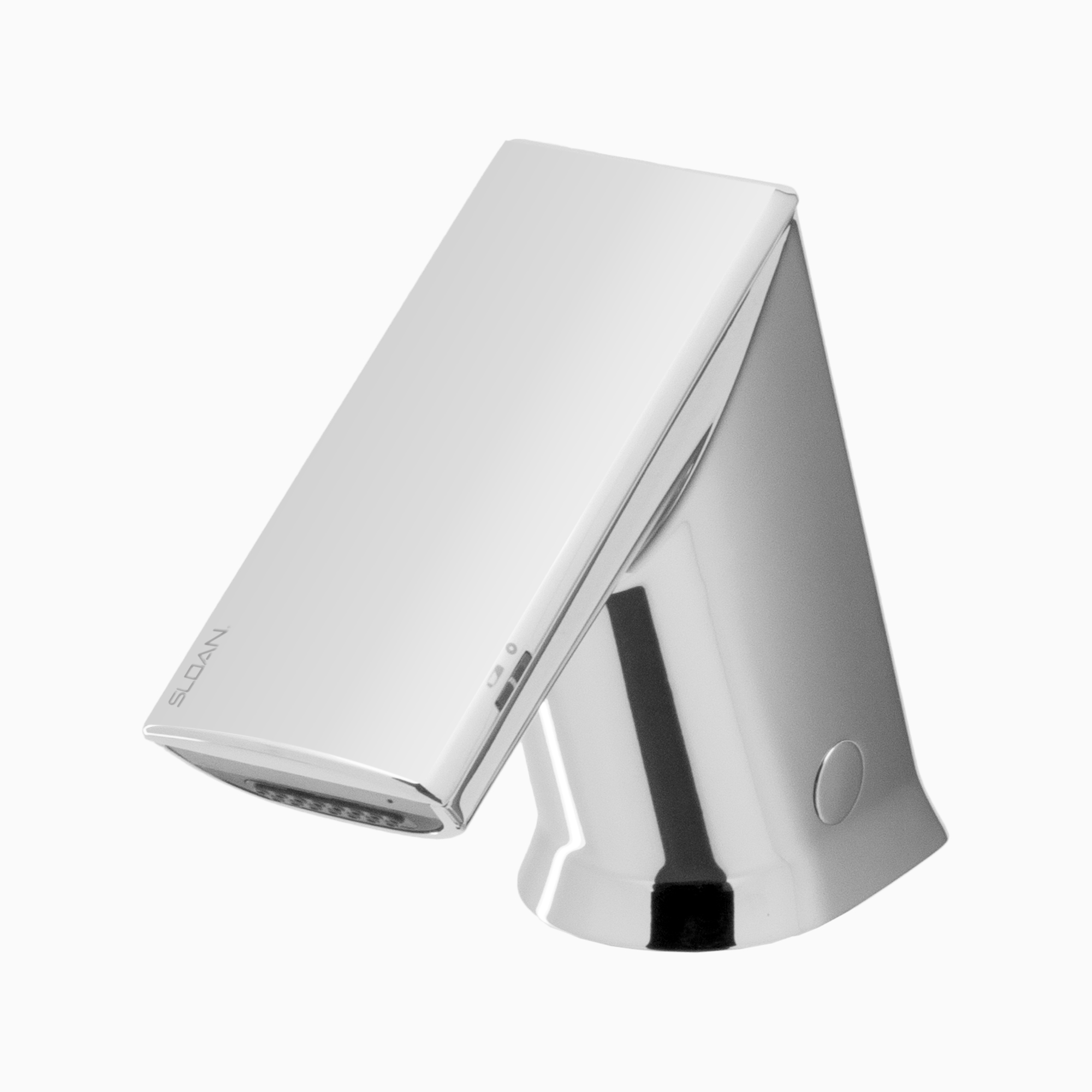
Sloan BASYS® EFX-350 Capacitance Sensor Faucet
Sloan’s BASYS EFX-350 gives engineers a genuine capacitance option. Instead of monitoring reflected infrared, the system emits and monitors a continuous ambient electrical field. When hands enter that field, the sensor activates the solenoid valve.
The installation implications are significant: Sloan specifically states that capacitance configurations are not compatible with metal sinks, and that faucet cables/control modules must not contact surrounding metal components.
Does not depend on optical reflections to recognize the user.
Metal sink and conductive-component restrictions must be respected.

Delta Commercial Electronic Lavatory Faucet with Proximity® Sensing
Delta provides another useful comparison because Proximity sensing makes the entire faucet body participate in detection. Delta states that the system responds extremely quickly regardless of lighting, reflections or approach direction.
It therefore demonstrates that manufacturers can address common infrared limitations without necessarily moving to capacitance sensing.
Broader sensing architecture reduces reliance on one optical window.
Adjust the effective field to suit the basin and user zone.
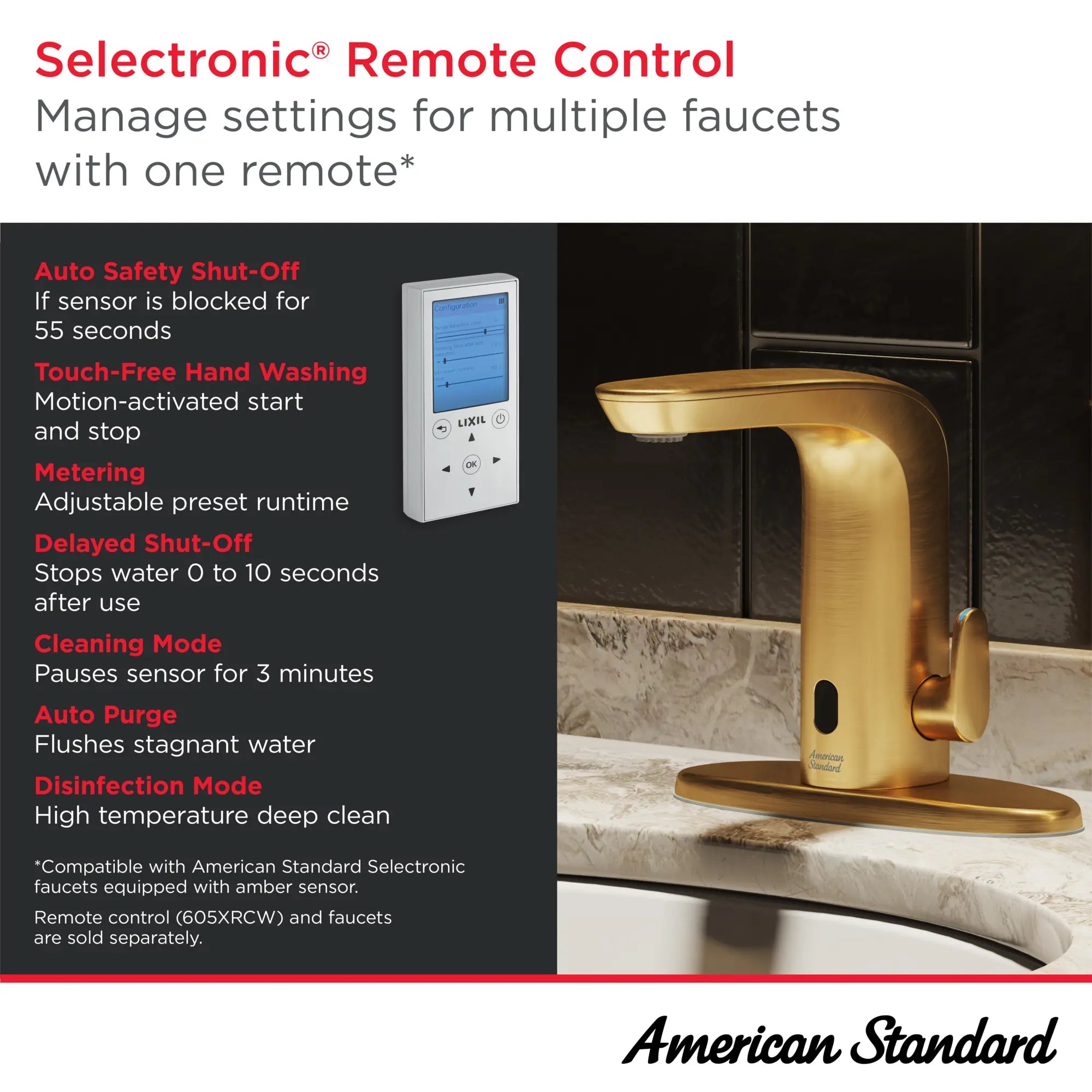
American Standard NextGen® Selectronic® Self-Calibrating Touchless Faucet
NextGen Selectronic demonstrates how sophisticated infrared can reduce the need to move to a completely different sensor technology. American Standard states that the advanced sensor automatically calibrates according to environmental and lighting conditions.
Automatic environmental calibration reduces manual tuning.
Adaptive IR still requires final functional testing.
Image standard: Each featured product uses a large product-specific image, remains uncropped at 500+ px desktop width, and the image itself links to the associated product/specification page.
When Should Engineers Consider Capacitance?
Capacitance deserves consideration where a commercial installation repeatedly challenges optical sensing. Because detection does not depend on reflected infrared, environmental lighting and reflective optical paths are fundamentally different concerns.
However, capacitance introduces its own requirements. Sloan’s installation guidance warns that conductive sinks, supply components, drains and other metal can affect proper operation if the system is not installed correctly.
Why Infrared Remains the Commercial Standard
Infrared remains extremely common because technicians understand it, installation constraints are familiar, sensing zones can often be adjusted, and modern algorithms can compensate for many historical reflection and lighting problems.
Adaptive systems from Fontana, BathSelect and American Standard demonstrate how sophisticated control logic can improve infrared performance without changing the fundamental detection method.
Which Technology Should You Choose?
| Project Condition | Review Direction |
|---|---|
| Metal lavatory or stainless sink | Infrared is generally the safer starting point. |
| Recurring optical/reflection problems | Consider adaptive IR, whole-body sensing or capacitance. |
| Standard public restroom | Modern adjustable infrared remains highly practical. |
| Highly controlled integrated sink system | Capacitance can be evaluated carefully. |
| Large maintenance portfolio | Favor technology already understood by facility technicians. |
Commercial Detection Technologies Worth Researching
Infrared vs. Capacitance FAQ
Is capacitance more reliable than infrared?
Not universally. It avoids optical reflection issues but introduces conductive-material and installation constraints.
Can capacitance sensor faucets be installed with metal sinks?
Not all can. Sloan specifically states that its BASYS capacitance configuration is not compatible with metal sinks.
Does infrared always suffer from reflections?
No. Modern adaptive systems can compensate for lighting and reflective conditions much better than basic fixed sensors.
What does self-calibrating infrared mean?
The controller automatically determines or adjusts detection behavior according to the installed environment.
Why does Delta use the whole faucet as a sensor?
A broader sensing architecture can reduce dependence on a narrow optical detection window and user approach angle.
Which sensor technology should architects specify?
Specify the performance and installation requirements first; choose technology after basin material, geometry and maintenance strategy are known.
Professional Sources
Sloan BASYS — Capacitance Sensor Specification
Manufacturer documentation explaining capacitance operation and metal-installation restrictions.
Sloan BASYS — Infrared Sensor Specification
Same faucet platform configured with automatic-setting dual infrared sensing.
U.S. EPA — Bathroom Faucet Efficiency
Public-lavatory water-efficiency guidance.
American Society of Plumbing Engineers
Professional plumbing-engineering and commercial specification resources.
International Code Council
Building and plumbing-code resources for commercial fixture installations.
Choose Sensor Physics Around the Sink System
Infrared remains the most practical commercial standard for many projects because it is familiar, adjustable and increasingly adaptive. Capacitance offers a genuinely different solution where optical sensing presents repeated problems, but its conductive-material restrictions make coordination especially important. The right sensor technology should be selected only after the basin, countertop, surrounding materials and maintenance strategy are understood.
Review Fontana Adaptive Infrared Sensor Faucet →Independent editorial disclosure: CommercialSensorFaucets.com provides independent engineering-oriented analysis based on published manufacturer documentation. Sensor technology compatibility, basin materials and installation requirements should be verified against the exact current configuration before procurement.
Leave a Reply