Tag: sensor-faucets

  • 5 Best Touchless Kitchen Faucets

    5 Best Touchless Kitchen Faucets

    Disclosure: This site is operated by the same company as Juno Showers, and the products featured below are our own. Specifications shown were accurate at the time of writing and may change. We are not an independent review site.

    5 Best Touchless Kitchen Faucets

    This list is drawn from our own catalog, not an outside survey, and it is ordered around one practical question: how does each faucet behave when a line cook’s hands are wet, soapy, or covered in fat and they cannot touch a handle. Sensor placement, pull-down reach, and manual override all matter more here than finish trends. These are JUNO products sold through this site; nothing below has been tested in a lab, and the notes are built only from the specifications supplied with each listing.

    How to choose

    • Mount type and rough-in. Deck-mounted single-hole faucets drop into an existing sink deck. Wall-mounted units need supply lines run inside the wall, which is a different job if you’re retrofitting rather than building out.
    • Manual override. Sensor faucets with a physical lever let a tech or cook run water when the sensor fails or the battery drains, without waiting for a repair ticket.
    • Finish and spatter visibility. Polished and brushed finishes behave differently under grease spatter and hard water. A finish that looks clean in a showroom photo may need more wipe-downs on a working line.
    • Sensor timeout behavior. An automatic shutoff that closes the valve after a few minutes is a water-saving feature on a handwash sink and an interruption on a stockpot-filling faucet.
    • Hole count. Single-hole installs simplify deck templates but assume the existing countertop or sink is already drilled for that configuration.

    Juno Smart Dual Mode Sensor with Pull Down Sprayer Touchless Kitchen Sink Faucet
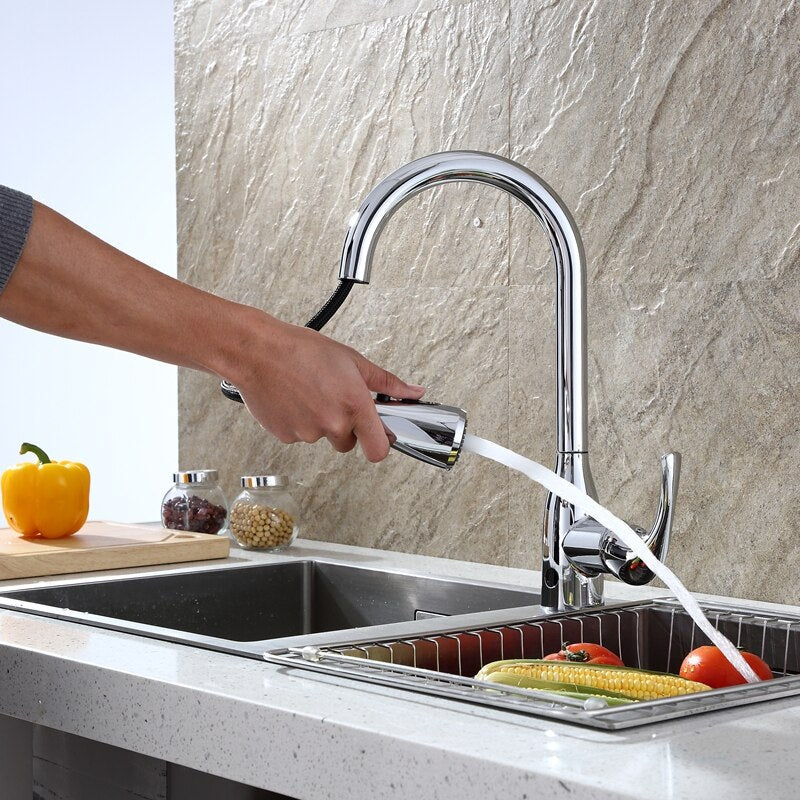
    Juno Smart Dual Mode Sensor with Pull Down Sprayer Touchless Kitchen Sink Faucet
    Juno Smart Dual Mode Sensor with Pull Down Sprayer Touchless Kitchen Sink Faucet

    This suits a primary prep sink where staff move between rinsing produce and blasting down heavier cookware, since the pull-down head gives reach that a fixed sensor spout does not. The body is solid brass with a ceramic valve core, finished in brushed nickel, and priced at $731.25.

    Specifications stop at body and valve material plus the dual-mode pull-down head; no flow rate or rough-in dimension is listed, so a technician should confirm under-sink clearance against the existing cabinet before ordering. The honest limitation here is the brushed nickel finish itself: its grain holds grease residue more visibly than a smooth polished surface, which means more frequent wipe-downs in a high-spatter prep area.

    Juno Smart Dual Mode Sensor with Pull Down Sprayer Touchless Kitchen Sink Faucet is the pull-down pick on this list and the one best suited to a sink that sees both rinsing and scrubbing duty.

    JUNO Touchless Motion Sensor Pull Down Dual Mode Sprayer Head Black Kitchen Sink Faucet
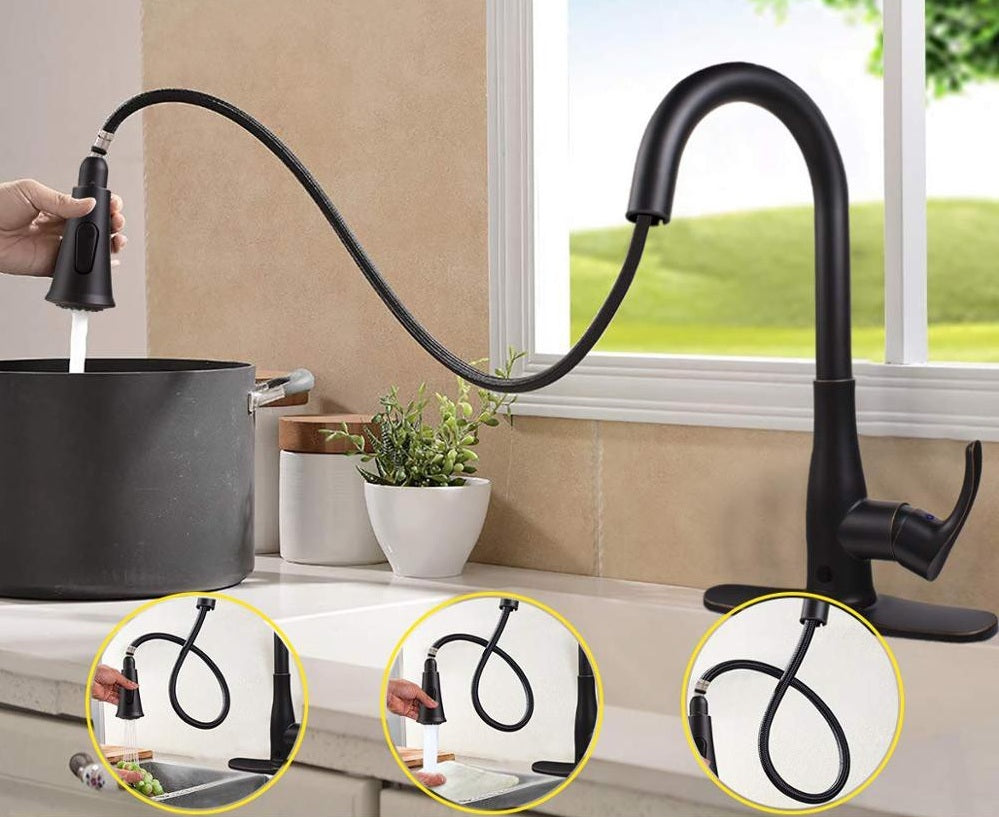
    JUNO Touchless Motion Sensor Pull Down Dual Mode Sprayer Head Black Kitchen Sink Faucet
    JUNO Touchless Motion Sensor Pull Down Dual Mode Sprayer Head Black Kitchen Sink Faucet

    Same solid brass body and ceramic valve core as the nickel version above, same pull-down dual mode sprayer head, but in black and at a lower price of $600.00. It suits kitchens standardizing on black hardware across a line, or a budget-conscious replacement where the brushed nickel model’s price doesn’t fit the job.

    The dual mode sprayer head and touchless motion sensor are the stated functional specs; mount type and flow rate are not given in the listing, so a tech should check existing hole spacing before committing to this unit as a direct swap. The limitation worth flagging: a black finish shows hard water spotting and fine scratches more readily than lighter finishes, which matters on a faucet that sits under constant sensor-triggered water contact.

    Full details are at JUNO Touchless Motion Sensor Pull Down Dual Mode Sprayer Head Black Kitchen Sink Faucet.

    Juno Pull Out Kitchen Faucet Black Commercial Kitchen Faucet Motion Sensor Control
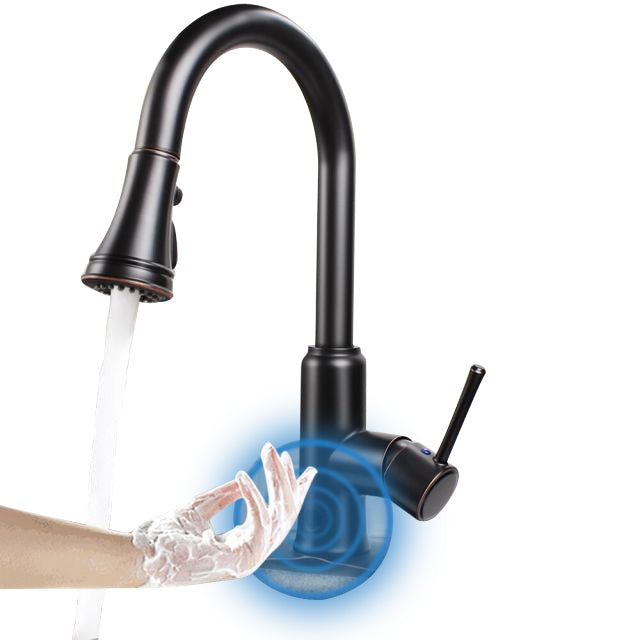
    Juno Pull Out Kitchen Faucet Black Commercial Kitchen Faucet Motion Sensor Control
    Juno Pull Out Kitchen Faucet Black Commercial Kitchen Faucet Motion Sensor Control

    This model is built for mixed-control environments: a hand wave activates the sensor, but the faucet also keeps a single lever handle for manual start and stop, and the body can swing from the sensor independently. That combination suits a kitchen where staff want touchless operation most of the time but need a manual fallback when hands are already full or the sensor needs servicing. Price is $687.05, finish is black.

    The automatic flow shuts off after three minutes, a feature described as built to prevent water waste when a faucet is left running unattended. The limitation is the flip side of that same feature: a three-minute cutoff will interrupt a longer task like filling a stockpot, requiring a second hand wave mid-fill.

    See Juno Pull Out Kitchen Faucet Black Commercial Kitchen Faucet Motion Sensor Control for the full listing.

    Juno Long Neck Infrared Sensor Automatic Kitchen Sink Faucet
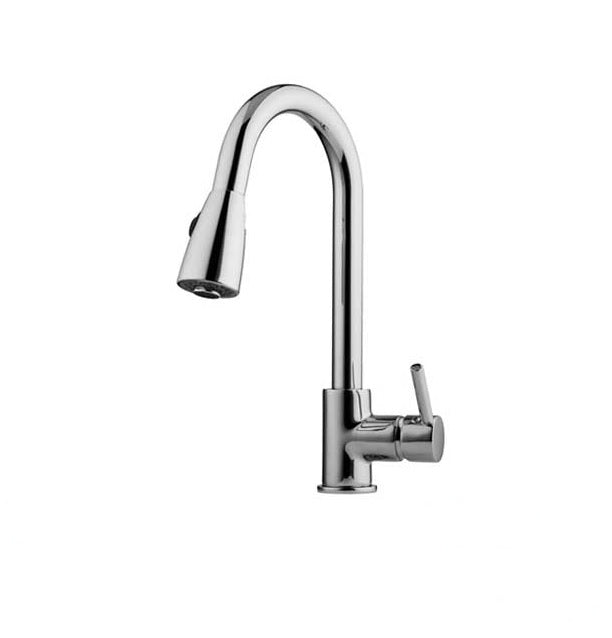
    Juno Long Neck Infrared Sensor Automatic Kitchen Sink Faucet
    Juno Long Neck Infrared Sensor Automatic Kitchen Sink Faucet

    The long neck design gives clearance over deeper sinks and taller stockpots, which suits a prep station where pot height is the limiting factor rather than side-to-side reach. It uses a single handle, a single hole for installation, and comes in chrome, priced from $577.88 to $705.88 depending on configuration.

    The data for this unit is inconsistent on mount type: the listing field specifies wall mount, while the description calls it a kitchen deck-mounted faucet. That conflict is itself the limitation worth flagging. Before ordering, confirm directly whether the rough-in required is a wall supply or a standard deck hole, since the two installs are not interchangeable and get resolved at the job site, not after the faucet arrives.

    Juno Long Neck Infrared Sensor Automatic Kitchen Sink Faucet covers this listing in full.

    Juno Montreal Bathroom Sink Sensor Faucet For Cold And Hot Water
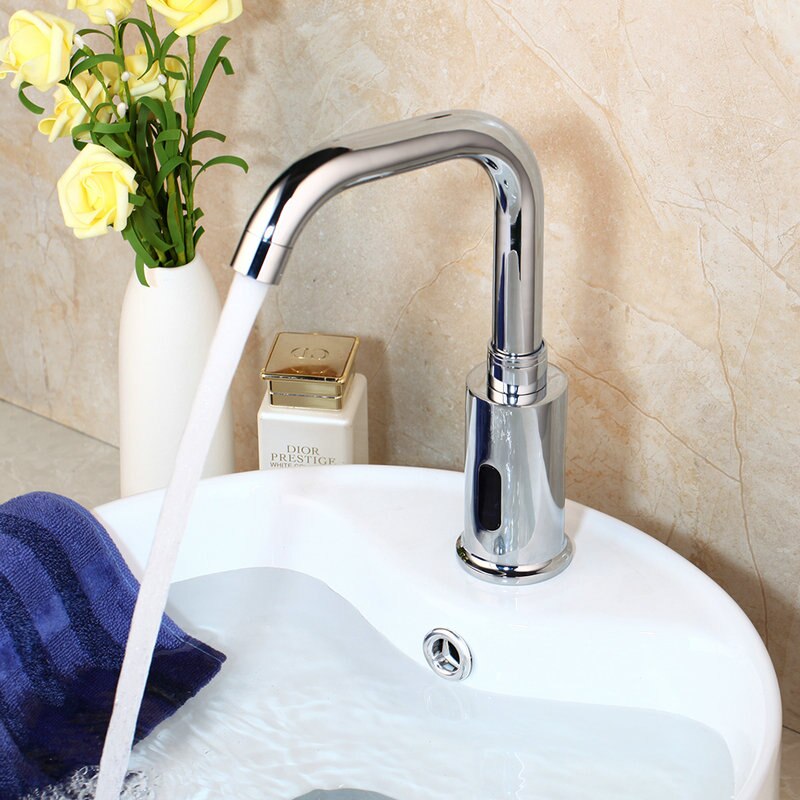
    Juno Montreal Bathroom Sink Sensor Faucet For Cold And Hot Water
    Juno Montreal Bathroom Sink Sensor Faucet For Cold And Hot Water

    This is a bathroom sink faucet by name and sizing, but it fits a specific commercial kitchen use: a dedicated handwash station separate from the prep or pot sink, where staff wash hands before returning to food contact surfaces without touching a handle. It is deck-mounted, single handle, single hole for installation, polished finish, and priced from $347.94 to $357.94 for cold and hot water service.

    The honest limitation is in the name: it is sized and specified as a bathroom lavatory faucet, not a prep faucet, so it suits a handwash lavatory and not stockpot filling or produce rinsing. The polished finish also shows water spots more readily than a satin or brushed surface, which matters on a fixture used constantly throughout a shift.

    Full specifications are at Juno Montreal Bathroom Sink Sensor Faucet For Cold And Hot Water.

    Product Price Finish Mount / Hole Notable Feature
    Juno Smart Dual Mode Sensor with Pull Down Sprayer Touchless Kitchen Sink Faucet $731.25 Brushed nickel Not stated Pull-down dual mode sprayer, solid brass body, ceramic valve core
    JUNO Touchless Motion Sensor Pull Down Dual Mode Sprayer Head Black Kitchen Sink Faucet $600.00 Black Not stated Pull-down dual mode sprayer, solid brass body, ceramic valve core
    Juno Pull Out Kitchen Faucet Black Commercial Kitchen Faucet Motion Sensor Control $687.05 Black Not stated Sensor plus manual lever, three-minute auto shutoff
    Juno Long Neck Infrared Sensor Automatic Kitchen Sink Faucet $577.88 to $705.88 Chrome Wall (per spec field) / deck (per description) – confirm before ordering Long neck clearance, single hole
    Juno Montreal Bathroom Sink Sensor Faucet For Cold And Hot Water $347.94 to $357.94 Polished Deck, single hole Sensor control, cold and hot water, lavatory sizing

    Before placing an order, measure the existing countertop or wall rough-in against the mount type stated for the faucet in question, especially on the long neck model where the listing itself is ambiguous. Confirm hole count against the current sink or lavatory deck rather than assuming a single-hole faucet will cover an existing three-hole cutout. Where a kitchen is standardizing finish across multiple fixtures, match brushed, polished, or black finishes across the run rather than mixing them sink by sink, since spatter and water-spot visibility differ by finish and an inconsistent look across a line is harder to justify to anyone walking the kitchen. Finally, check supply line type and whether hot and cold service is required at that specific sink, since the Montreal listing is built for both and a handwash-only location may not need it.

  • Winterizing Sensor Faucets: What Fails in Unheated Spaces

    Drain the solenoid body separately from the supply line, pull the battery pack or isolate the 24V transformer from the cold zone, and leave the backflow preventer open per code. A sensor faucet left “winterized” like a manual fixture, meaning the supply valve closed and nothing else touched, will still crack a solenoid body or corrode a battery compartment by the second season. The electro-mechanical parts fail on a different schedule than the pipe.

    Why Solenoid Faucets Freeze Differently Than Manual Ones

    A manual faucet is a dumb assembly: shut the valve, drain the line, done. A sensor faucet has a solenoid valve body sitting in the water path, usually with a small chamber and o-ring seats that hold residual water even after the supply line empties. That trapped water freezes at the same 32°F (0°C) as anything else, but because the chamber is smaller and the walls are often cast rather than copper, the solenoid body cracks before you’d see a split in a 1/2 inch supply line. You can drain the building’s water lines perfectly and still lose the faucet because nobody opened the solenoid port.

    The second difference is that the faucet has power running to it. Battery packs and AC transformers don’t freeze in the sense that ice doesn’t form inside them, but cold cycling causes condensation inside the battery compartment, and that moisture is what kills contacts and corrodes terminals over a winter. So you’re managing two separate freeze risks: water in the solenoid, and moisture in the electronics.

    Draining Supply Lines and Solenoid Bodies Correctly

    Shut the supply at the stop, then open the solenoid manually (most commercial units have a manual override or bleed screw specifically for this) to let the chamber drain, not just the line above it. If the faucet has no manual override, disconnect the solenoid body at the union and blow it out with low-pressure compressed air, under 50 psi is standard for this, until no water shows at the outlet.

    Don’t skip the backflow preventer. Local plumbing code will specify the draining sequence for the backflow assembly feeding the fixture, and in most jurisdictions this means opening the test cocks after the main shutoff is closed, letting the check valves drain by gravity, and leaving the assembly open until spring. An undrained backflow preventer in an unheated mechanical room is a more common freeze failure than the faucet itself.

    • Close the supply stop first, not the main building valve, so you’re not draining fixtures you don’t need to touch.
    • Open the solenoid’s manual bleed or disconnect the union to clear the chamber.
    • Drain the backflow preventer per the local code sequence, typically through the test cocks.
    • Leave all valves in the open/drained position until startup, don’t reseal a system you think is empty.

    Protecting Battery Packs and 24V Transformers From Cold

    Battery-powered units are easier to winterize than hardwired ones because you can just pull the batteries. Remove them, don’t leave them in a faucet that’s sitting unused in a 20°F mechanical room for four months. Cold accelerates self-discharge and increases the odds of a leaking cell corroding the compartment contacts. Check the battery compartment’s IP rating before you decide whether to leave it sealed or open for the winter; a compartment rated IP67 or better can sit closed without trapping condensation, but anything lower should be opened slightly or have a desiccant pack added so moisture doesn’t collect against the contacts.

    Transformer-fed units need a different fix. The transformer itself should never be mounted in the freeze zone to begin with, that’s a design decision, not a winterizing step, but if you’ve inherited a job where the 24V AC transformer is in an unheated chase or exterior wall cavity, winterizing means relocating it to a conditioned space if at all possible. If relocation isn’t feasible this season, at minimum verify the transformer’s enclosure rating matches the exposure and that the low-voltage wiring runs are sealed where they penetrate the cold zone, so condensation doesn’t track down the cable into the solenoid connector.

    Insulating Exposed Chases, Mechanical Rooms, and Risers

    Pipe insulation on the riser feeding the faucet buys you time during a cold snap but it doesn’t replace draining the system for a space that’s unheated all winter. Use insulation to protect the sections you can’t fully drain, like a riser that also feeds other active fixtures, and combine it with heat tape on runs that see sustained sub-freezing air. Don’t wrap the solenoid body itself expecting that to save it if the chamber is still full of water; insulation slows heat loss, it doesn’t generate heat, and a standing column of water in an uninsulated mechanical room will still freeze overnight even under wrap.

    If the space has any intermittent heat source, a unit heater on a low set point is more reliable than insulation alone for protecting the electronics and keeps the compartment above the dew point enough to reduce condensation cycling. For spaces with zero heat, like an exterior wall-mounted fixture bank at a loading dock, full drain-down each night during freeze season is often the only workable approach rather than trying to keep the lines live.

    Spring Startup Checks Before Reactivating Sensors

    Before you close the backflow test cocks and re-pressurize, inspect every solenoid body you opened for hairline cracks around the chamber seam, these don’t always leak immediately under static pressure but will show up as a slow weep once the faucet starts cycling. Reinstall batteries and check the compartment gasket for cracking or compression set from the cold; a gasket that’s taken a permanent set won’t reseal properly even if it looks intact.

    Bring the supply up slowly rather than opening the stop fully, this lets you catch a cracked solenoid at low pressure before it sprays at full line pressure. Cycle the sensor manually several times to confirm the solenoid is actuating cleanly, since a solenoid that sat dry all winter can have a sluggish plunger even if the body itself didn’t crack. If you’re specifying replacement units for a space that freezes every year, it’s worth looking at touchless bathroom faucets rated for the exposure you actually have rather than retrofitting a standard interior-rated sensor faucet into an unheated vestibule.

    Year-Two Winterization Checklist for Techs

    Component Winter risk Action
    Solenoid valve body Cracks below 32°F (0°C) with trapped water Drain chamber via manual bleed or union disconnect
    Battery compartment Condensation and corrosion, not freezing per se Remove batteries; check IP rating before sealing closed
    24V AC transformer Enclosure failure if mounted in freeze zone Relocate to conditioned space or verify enclosure rating
    Backflow preventer Trapped water in check valves splits the body Drain per local code sequence, leave open until startup
    Supply riser Standing water freezes overnight in unheated chases Insulate and/or heat trace; drain fully if unheated all season

    Walk the space once in late fall and confirm every item on that table against the actual conditions, not the conditions when the faucet was installed. A mechanical room that was heated during construction and isn’t heated now is the most common cause of a “surprise” freeze failure in year two. If you find a transformer or solenoid body already mounted in a spot that can’t be reasonably protected, flag it for relocation rather than re-winterizing the same vulnerable point every year.

  • The Real Year-Two Maintenance Calendar for Sensor Faucets

    Why Manufacturer Schedules Miss Year-Two Failures

    Run your sensor faucets on the schedule printed in the install manual and you will still get callbacks in month 14 through 20. Those schedules are written for year one, when batteries are fresh and diaphragms haven’t seen a full cycle count. Year two is where lithium packs sag, solenoid diaphragms take on mineral fatigue, and sensor lenses accumulate enough film to start misreading hand distance. None of that shows up on a generic quarterly checklist built around “inspect and clean.” A schedule built from actual failure timing catches these before they turn into a lobby full of faucets that won’t shut off.

    Quarterly Task Calendar Built From Failure Data

    The table below is organized by what actually fails at each interval, not by a fixed rotation through every fixture in the building. Use it as the baseline and adjust frequency upward for high-traffic restrooms (airports, stadiums, hospital public areas) and downward for low-use fixtures in back-of-house areas.

    Interval Task Why This Timing
    90 days Clean sensor lens with non-abrasive cloth, check IR range against spec Film buildup from hand soap and hard water causes false triggers and short-cycling before it causes total failure
    90 days Check aerator for flow restriction Sediment collects faster in low-flow aerators rated at 0.5 gpm/1.9 Lpm under EPAct 1992; flow drop is often the first symptom techs notice
    6 months Test battery voltage under load, not just at rest Resting voltage looks fine on a dying pack; load testing catches sag before failure
    6 months Inspect solenoid valve for slow drip or delayed shutoff Diaphragm fatigue is progressive; catching it at 6 months prevents a mid-cycle failure
    12 months ASSE 1070 mixing valve inspection and function test Code-cited annual requirement in most jurisdictions for tempered water compliance
    12-18 months Replace 6V lithium battery pack proactively Documented field failure window regardless of remaining indicator charge

    Battery and Power Checks by Season

    6V lithium battery packs typically fail at 12 to 18 months in commercial use, and the failure mode is rarely a clean drop to zero. Instead you get intermittent triggering, slow sensor response, or a faucet that runs longer than it should because the solenoid isn’t getting a clean signal. Cold weather accelerates the sag in unconditioned spaces (parking structure restrooms, exterior-wall mechanical rooms), so if you’re running a calendar-based swap rather than voltage testing, move those fixtures to the front of the line going into winter. For AC-powered units, check transformer output and connections at the same interval since a failing transformer produces symptoms that look identical to battery sag and techs waste time swapping batteries that were fine.

    Don’t rely on the low-battery indicator light alone. On several common commercial platforms that light triggers at a voltage threshold that still leaves weeks of intermittent operation before full failure, which is exactly the callback you’re trying to avoid.

    Cartridge, Aerator, and Solenoid Scaling Intervals

    Aerators rated at 0.5 gpm/1.9 Lpm under EPAct 1992 restrict flow deliberately, which means they also restrict the ability to flush sediment on their own. In hard water buildings, plan on pulling and soaking aerators every 90 days minimum, not the 6-month interval that’s fine for standard-flow fixtures. If you’re seeing flow drop faster than that, it’s worth checking whether the building’s water treatment has changed rather than assuming the aerator is defective.

    Solenoid valves scale internally in a way you can’t inspect visually without disassembly. The practical field indicator is response time: a solenoid that used to shut off cleanly and now trails off with a slow drip is telling you the diaphragm has mineral buildup or early fatigue. Don’t wait for a full stuck-open failure. Pull the solenoid at the 6-month check, inspect the diaphragm seat, and descale in vinegar or manufacturer-approved solution if you see visible buildup. Replace rather than clean if the diaphragm shows cracking, since a diaphragm that’s already cracked will fail within weeks regardless of cleaning.

    Cartridge-style mixing valves inside the faucet body (separate from the ASSE 1070 point-of-use mixing valve, if one is installed) should get a visual check for scale at the same 6-month interval. If your building is specifying replacement fixtures rather than repairing existing units, it’s worth comparing solenoid and cartridge access design across product lines, since some touchless bathroom faucets are built with front-serviceable cartridges that cut disassembly time significantly compared to units requiring full removal from the deck.

    Documenting Service for Code and Warranty

    ASSE 1070 mixing valve inspection is an annual code check in most jurisdictions with public restroom requirements, and it needs a paper trail independent of whatever else you’re logging. Keep that record separate from general maintenance notes: date, technician, valve set-point temperature verified, and any adjustment made. If a scald complaint ever turns into a liability question, this is the document that matters.

    For everything else, a simple fixture log beats a building-wide spreadsheet. Track by fixture ID: last lens cleaning, last aerator service, battery install date, and any solenoid work. When a fixture starts generating repeat callbacks, this log tells you whether it’s a pattern (bad batch of batteries, hard water zone) or an isolated unit that needs replacement rather than continued repair.

    Building a Route Across Multi-Fixture Buildings

    Group fixtures by exposure, not by floor plan. High-traffic lobby and food-service restrooms need the 90-day lens and aerator cycle without exception. Low-traffic back-of-house fixtures can often stretch to 6 months on lens cleaning without generating false triggers, which frees up route time for the fixtures that actually need it. Batch the annual ASSE 1070 checks building-wide in the same visit as your 12-month battery swap where schedules align, since both require the water shut off to the fixture group anyway.

    If you’re servicing more than 40 to 50 sensor faucets across a property, a route based on fixed calendar dates alone will drift. Tag each fixture with its install date and last-service date in whatever CMMS or spreadsheet you’re using, and let the system flag work orders rather than trying to remember which restroom was serviced when.

    What To Check This Week

    • Pull battery packs on any sensor faucet installed 12 to 18 months ago and load-test, even if the indicator light is green.
    • Confirm ASSE 1070 mixing valves have a documented inspection within the last 12 months; schedule immediately if not.
    • Check the last lens cleaning date on high-traffic restroom fixtures; if it’s past 90 days, move it to this week’s route.
    • Flag any fixture with three or more callbacks in the past year for full replacement evaluation rather than continued repair.